


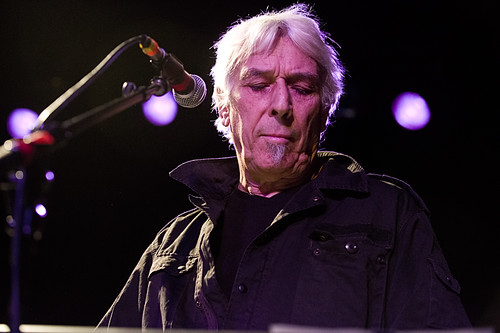
John Davies Cale OBE (born March 9, 1942) is a Welsh musician, composer, and record producer whose influence spans over six decades of avant-garde, rock, classical, and experimental music. As a founding member of the Velvet Underground, Cale helped shape the sound of modern rock, blending experimental drones with classical techniques, and later forged a prolific solo career that continues into the 2020s. Known for his fearless experimentation, collaborations with legendary artists, and mastery of multiple instruments including viola, piano, bass, and guitar, Cale remains a pivotal figure in music history.
From his early training in Wales to groundbreaking work in New York’s avant-garde scene, Cale has consistently pushed musical boundaries. His collaborations have included icons such as Lou Reed, Brian Eno, Nico, Leonard Cohen, and more. Beyond performing, Cale has produced influential albums for artists like The Stooges, Patti Smith, and the Modern Lovers, leaving an indelible mark on punk, art rock, and alternative music.
Cale’s work has been recognized with honors including an OBE for services to music and induction into the Rock and Roll Hall of Fame as a member of the Velvet Underground in 1996. He continues to release albums, tour internationally, and contribute to contemporary projects, solidifying his legacy as a living musical innovator.
Quick Facts of John Cale
| Key Fact | Details |
|---|---|
| Full Name | John Davies Cale |
| Date of Birth | March 9, 1942 |
| Place of Birth | Garnant, Carmarthenshire, Wales |
| Nationality | Welsh |
| Occupation | Musician, Composer, Songwriter, Record Producer |
| Instruments | Vocals, Viola, Bass, Guitar, Piano, Keyboards |
| Genres | Art Rock, Avant-Garde, Experimental Rock, Pop |
| Education | Studied music at Goldsmiths College, London; trained with Aaron Copland at Tanglewood |
| Years Active | 1957–present |
| Labels | Columbia, Reprise, Island, A&M, ZE, Beggars Banquet, Domino, EMI |
| Notable Groups | The Velvet Underground, Theatre of Eternal Music |
| Marriages | Betsey Johnson (1968–1971), Cynthia Wells (1971–1975), Risé Irushalmi (1981–1997) |
| Children | One daughter (Eden Cale) |
| Honors | OBE (2010), Rock and Roll Hall of Fame (1996) |
| Net Worth | Estimated $15–20 million (from music, production, and royalties) |
Early Life and Education
John Cale was born in the coal-mining village of Garnant, Wales, to Will Cale, a miner, and Margaret Davies, a primary school teacher. Cale grew up bilingual, learning English at school while his mother taught him Welsh at home. He began studying organ at a young age and displayed exceptional talent on the viola, eventually joining the National Youth Orchestra of Wales at age 13.
A scholarship allowed Cale to study music at Goldsmiths College in London, where he organized avant-garde performances and explored experimental composition. In 1963, he moved to New York City to study under Aaron Copland, marking the beginning of his immersion in the American avant-garde scene.
Career Highlights
The Velvet Underground (1964–1968)
Cale co-founded the Velvet Underground with Lou Reed, Sterling Morrison, and Angus MacLise. He contributed viola, bass, piano, and vocals to the band’s early recordings, including The Velvet Underground & Nico (1967) and White Light/White Heat (1968). His avant-garde influences, including drone music from his time with La Monte Young’s Theatre of Eternal Music, shaped the band’s unique sound.
Despite tensions with Reed leading to his departure in 1968, Cale’s experimental contributions defined the band’s early work, influencing generations of punk, art rock, and alternative musicians.
Solo Career and Production (1970s–1980s)
After leaving the Velvet Underground, Cale embarked on a solo career, releasing critically acclaimed albums such as Vintage Violence (1970), Paris 1919 (1973), and Fear (1974). His work combined classical techniques with rock and experimental elements. He also produced albums for influential acts including The Stooges, Patti Smith, and Nico, cementing his role as a key figure in shaping the proto-punk and art-rock sound.
Cale’s solo output in the mid-1970s, including Slow Dazzle (1975) and Helen of Troy (1975), displayed a darker, aggressive tone. He became known for provocative live performances, often pushing audiences with confrontational theatrics and innovative stagecraft.
Later Career (1990s–2020s)
Cale continued to release albums and collaborate with major artists into the 21st century, including Walking on Locusts (1996), HoboSapiens (2003), Shifty Adventures in Nookie Wood (2012), and Mercy (2023). He has also contributed to film scores, ballet compositions, and multimedia art projects, demonstrating a lifelong commitment to artistic exploration.
In recent years, Cale has toured internationally, performed classic albums live, and collaborated with contemporary musicians, maintaining his relevance in modern music.
Personal Life
Cale has been married three times and has one daughter. He struggled with substance abuse in the 1960s and 1970s but later overcame his addictions, attributing personal growth and creative focus to the birth of his daughter and maturing perspective. He remains active in music production, advocacy, and public appearances.
Legacy and Honors
- Rock and Roll Hall of Fame Induction (1996) – as a member of the Velvet Underground
- Officer of the Order of the British Empire (OBE, 2010) – for services to music and the arts
- Pioneered the integration of classical instrumentation and avant-garde techniques into rock music
- Influenced punk, alternative, and art-rock genres worldwide
- Mentor and collaborator to numerous legendary artists, shaping the musical landscape for generations