



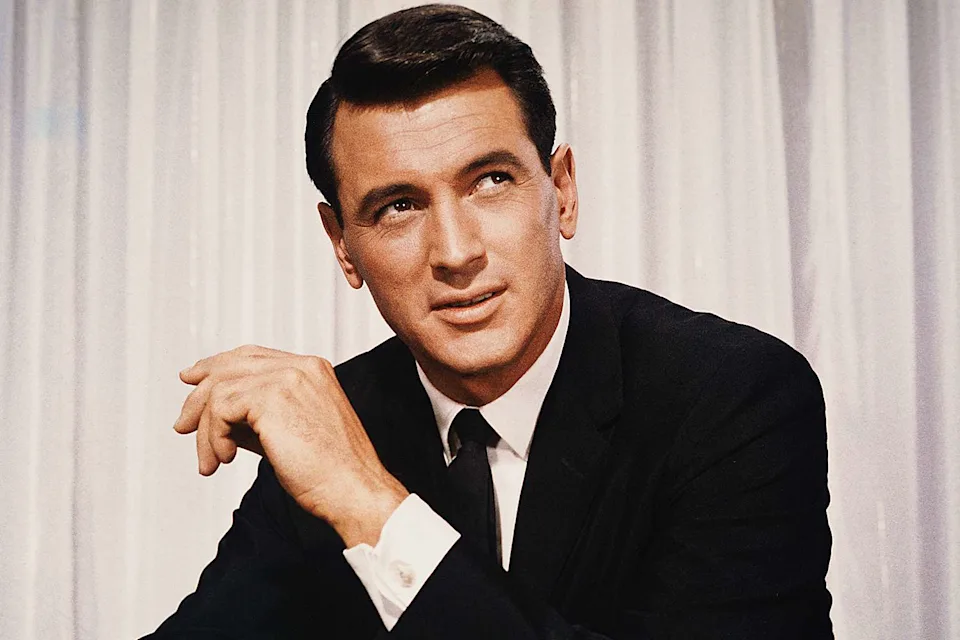
Rock Hudson, born Roy Harold Scherer Jr. on November 17, 1925, in Winnetka, Illinois, became one of Hollywood’s most iconic leading men during the mid-20th century. Known for his charisma, towering height, and versatile acting, Hudson left a lasting mark on film and television. Beyond his cinematic achievements, his openness about his AIDS diagnosis helped raise awareness and transform public perceptions of the disease.
Quick Facts About Rock Hudson
| Full Name | Roy Harold Scherer Jr. |
|---|---|
| Stage Name | Rock Hudson |
| Date of Birth | November 17, 1925 |
| Place of Birth | Winnetka, Illinois, USA |
| Date of Death | October 2, 1985 |
| Place of Death | Beverly Hills, California, USA |
| Age at Death | 59 years |
| Cause of Death | AIDS-related complications |
| Occupation | Actor |
| Years Active | 1948–1985 |
| Height | 6 ft 5 in (195.5 cm) |
| Net Worth at Death | Approx. $10 million |
Early Life and Family Background
Hudson was the only child of Katherine Wood, a homemaker, and Roy Harold Scherer Sr., an auto mechanic. After his parents divorced when he was four, his mother remarried Wallace Fitzgerald, who adopted him.
Raised during the hardships of the Great Depression, Hudson developed resilience early on. He attended New Trier High School in Winnetka, Illinois, where he struggled with memorizing lines but cultivated a passion for acting. Early work as a theater usher helped him gain exposure to films and performance, fueling his Hollywood ambitions.
Career Beginnings and Milestones
After serving as an aircraft mechanic in the U.S. Navy during World War II, Hudson moved to Los Angeles to pursue acting. He adopted the stage name Rock Hudson, inspired by the Rock of Gibraltar and the Hudson River.
His early career included minor film roles until Universal Pictures signed him to a contract. His breakthrough came with “Magnificent Obsession” (1954), portraying a playboy who transforms his life to help others. This success was followed by classics like “All That Heaven Allows” (1955) and “Giant” (1956), the latter earning him an Academy Award nomination for Best Actor.
Notable Works and Achievements
Hudson was particularly famous for his romantic comedies alongside Doris Day, including:
- Pillow Talk (1959)
- Lover Come Back (1961)
- Send Me No Flowers (1964)
He won four Golden Globe Awards for World Film Favorite – Male (1959, 1960, 1961, 1963) and earned a star on the Hollywood Walk of Fame at 6116 Hollywood Blvd. His on-screen presence, towering stature, and charm made him one of Hollywood’s most beloved leading men.
Personal Life and Relationships
Hudson’s personal life was largely private due to societal pressures. He married Phyllis Gates in 1955, a union seen as a cover for his sexuality; they divorced three years later. While publicly presenting as heterosexual, Hudson’s homosexuality was known within Hollywood circles.
Net Worth and Lifestyle
At the time of his death in 1985, Hudson’s net worth was estimated at $10 million, amassed through his acting career, endorsements, and investments. He owned multiple properties, including a Beverly Hills mansion, reflecting his Hollywood success.
Interesting Facts
- Stage Name: “Rock Hudson” combines the Rock of Gibraltar and the Hudson River.
- Height: 6’5” (195.5 cm), contributing to his commanding on-screen presence.
- Military Service: Served in the U.S. Navy during WWII.
- Artistic Talent: An accomplished painter who enjoyed creating artwork in his free time.
Charitable Work and Legacy
Hudson’s death from AIDS-related complications in 1985 drew public attention to the epidemic, helping to destigmatize the disease and spur funding for research. His contributions to film and his pioneering role in AIDS awareness cemented his place in history as both a cinematic icon and a social influencer.
Cultural Impact and Future Legacy
Rock Hudson’s career continues to inspire retrospectives, documentaries, and biographies. His films remain classics, and his life story serves as a reminder of the challenges faced by Hollywood trailblazers, as well as the impact of public figures in raising awareness for health and social causes.
Conclusion
From small-town beginnings to Hollywood stardom, Rock Hudson exemplified talent, resilience, and charisma. His iconic performances, combined with his role in highlighting the AIDS crisis, ensure his legacy as both a cinematic legend and a cultural trailblazer. Decades after his passing, Hudson remains an enduring symbol of classic Hollywood glamour and a pioneer in the fight against stigma and ignorance.